
What we have learned about slow travel
As remote workers, we have the luxury of being able to work from anywhere. Remote work therefore allows us to travel in ways that don’t require taking much PTO. We call them workcations, where we live and work in a location for a few weeks. But the idea behind a workcation is one that’s been gaining momentum in recent years in the travel communities: slow travel.
While we have only had a few opportunities to embrace the practice, slow travel has become one of our family’s favorite ways to get to explore a place. And just like with any style of travel, slow travel has its pros and cons, its highs and lows. Each slow travel trip teaches us something new – about the way we travel, about the world, and about ourselves.
What is Slow Travel?
Slow travel focuses on taking your time to fully immerse yourself in a destination. It encourages not rushing through a list of tourist attractions. Slow travel involves spending longer periods of time in one location. It also means traveling at a more leisurely pace. Additionally, you engage in activities that allow you to connect with the local culture and environment.
If you’re not already familiar with the concept of slow travel, then you may not know that this style of travel has its roots in the slow food movement. The slow food movement began in Italy in the 1980s as a response to the fast food culture that was taking over. The slow food movement emphasized the importance of locally-sourced, high-quality ingredients, traditional cooking methods, and taking the time to enjoy meals with friends and family.
The slow travel movement emerged in the early 2000s as a way to apply the principles of the slow food movement to travel. It was a response to the fast-paced, consumerist approach to travel that was becoming increasingly popular, and it emphasized the importance of taking a more mindful, sustainable approach to travel.
The COVID-19 pandemic contributed to the rise of slow travel, as people have become more interested in exploring nearby destinations or staying in one place for longer periods of time. The popularity and prevalence of digital nomads has also caused slow travel to explode.
The concept of slow travel doesn’t merely rest on the shoulders of the slow food movement. It also draws from earlier traditions of grand tours and pilgrimages. Travelers would embark on extended journeys to explore new cultures and lands. These journeys were less about the destinations and more about the experiences and transformations along the way.
What does Slow Travel look like?
If I’m being entirely honest, I only first heard of the term slow travel in 2020. As it turned out, slow travel is already something we were interested in doing or had done in some capacity. An early example from my college days: my family used to own property in Whistler, CA. The summer before I left to study abroad in Paris during college, we drove from Florida to Whistler to spend the summer there, together. Several weeks living and working from Whislter allowed us to get to know the local sights, local restaurants and shops, and locals themselves! I was fortunate enough to be welcomed into a tight-knit group of ladies while I was there, who really helped me see all sides of life in Whistler. A total treat of an experience that I still think of fondly, twenty years later.
Slow travel can manifest in many forms. There is no one-size-fits-all approach for slow travel. For some, slow travel means spending a few months in a single city, getting to know its neighborhoods, learning the language, and engaging with locals. A study abroad program or exchange student program could also classify as slow travel! Staying in a city for the duration of the olympics could count as slow travel. For others, slow travel might mean a month-long home exchange, doing a whole lot of nothing during a week-long vacation in a small town, or a family workcation in a beach town. The whole point is to slow down and not feel rushed.
Websites and apps like AirBNB, HomeExchange, MindMyHouse, Workaway, and WWOOF allow travelers to find long-term accommodations, volunteer opportunities, home swaps and house-sits, and cultural exchanges with ease. Digital nomads, in particular, have embraced slow travel as a way to balance work and exploration, finding communities and coworking spaces around the globe that cater to their needs.
Moreover, the emphasis on sustainable travel has brought new attention to slow travel. As more travelers become aware of the environmental impact of frequent flying and rapid tourism, the appeal of staying in one place longer, reducing carbon footprints, and supporting local economies has grown. Slow travelers often prioritize eco-friendly practices, such as using public transportation, opting for local, organic food, and participating in community-based tourism initiatives.
Ultimately, slow travel is not just a way to the world but a philosophy of mindfulness and intentionality in how we move through it. Slow travel encourages us to be present (something I, for one, struggle with!!), to savor each moment, and to forge deeper connections with the places we visit and the people we meet. By slowing down, we give ourselves the gift of truly experiencing the world in all its richness and complexity.
Why did we choose Playa del Carmen as a slow travel destination?
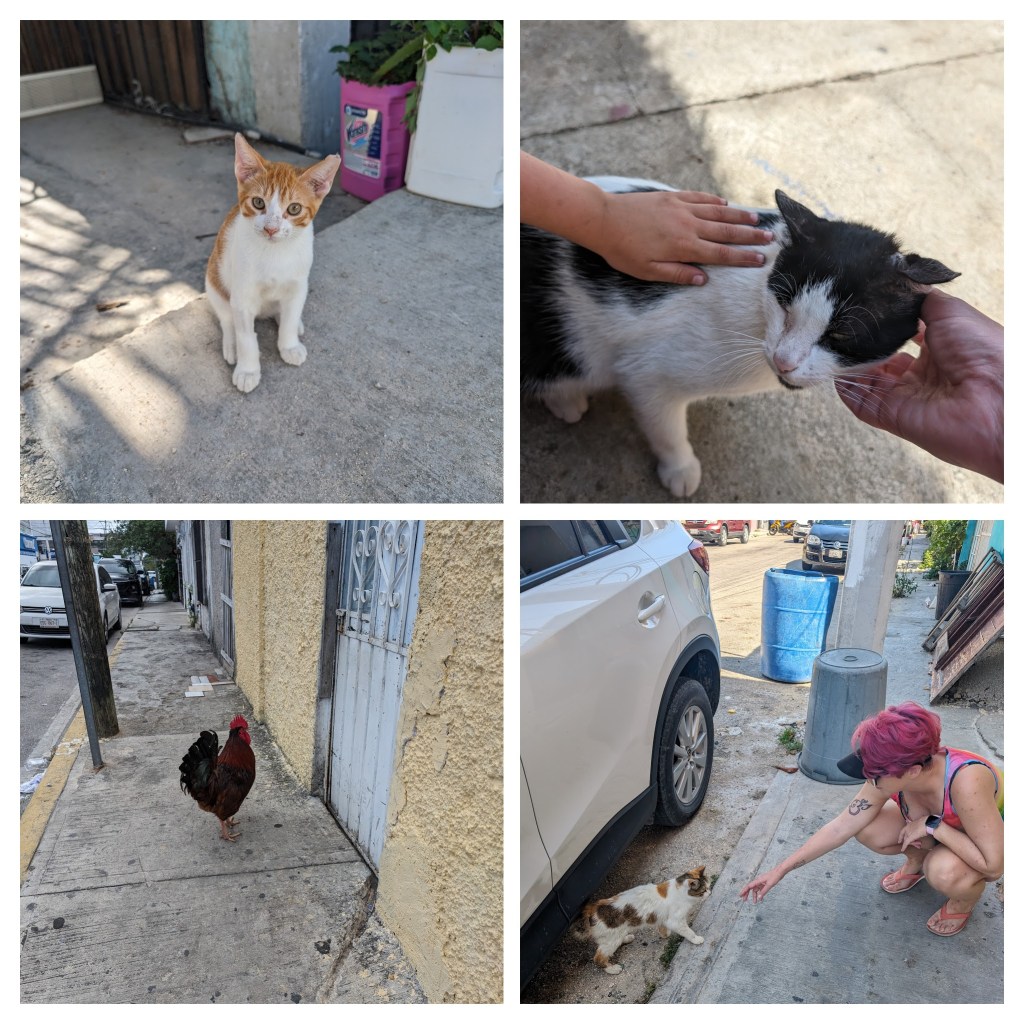

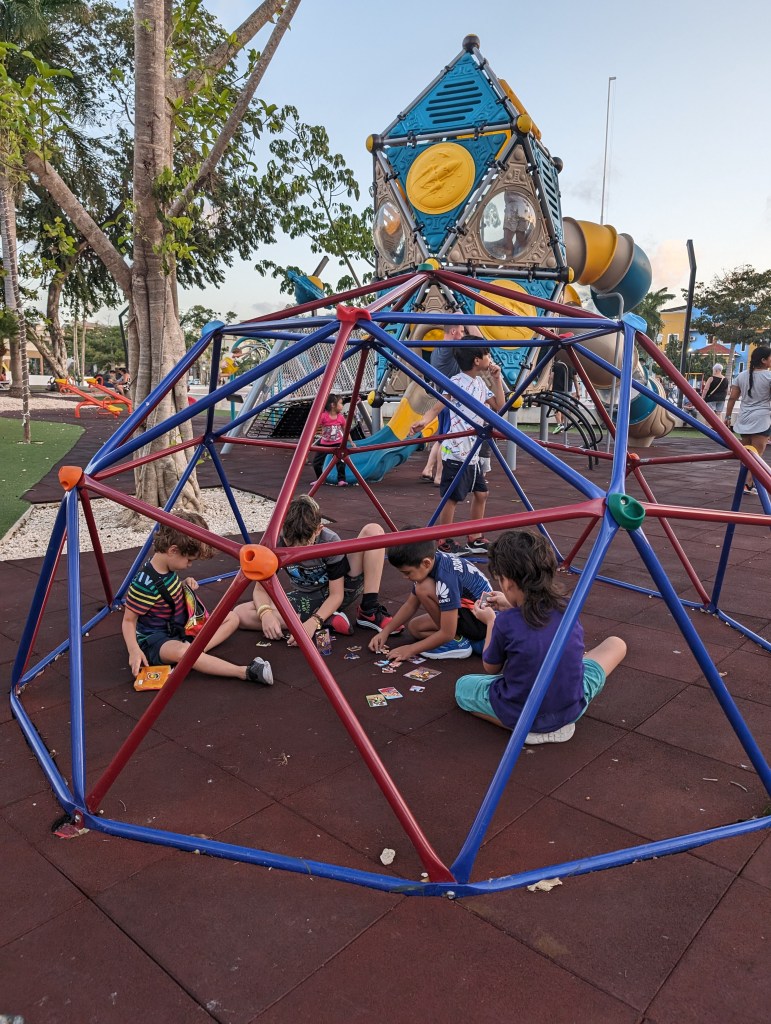
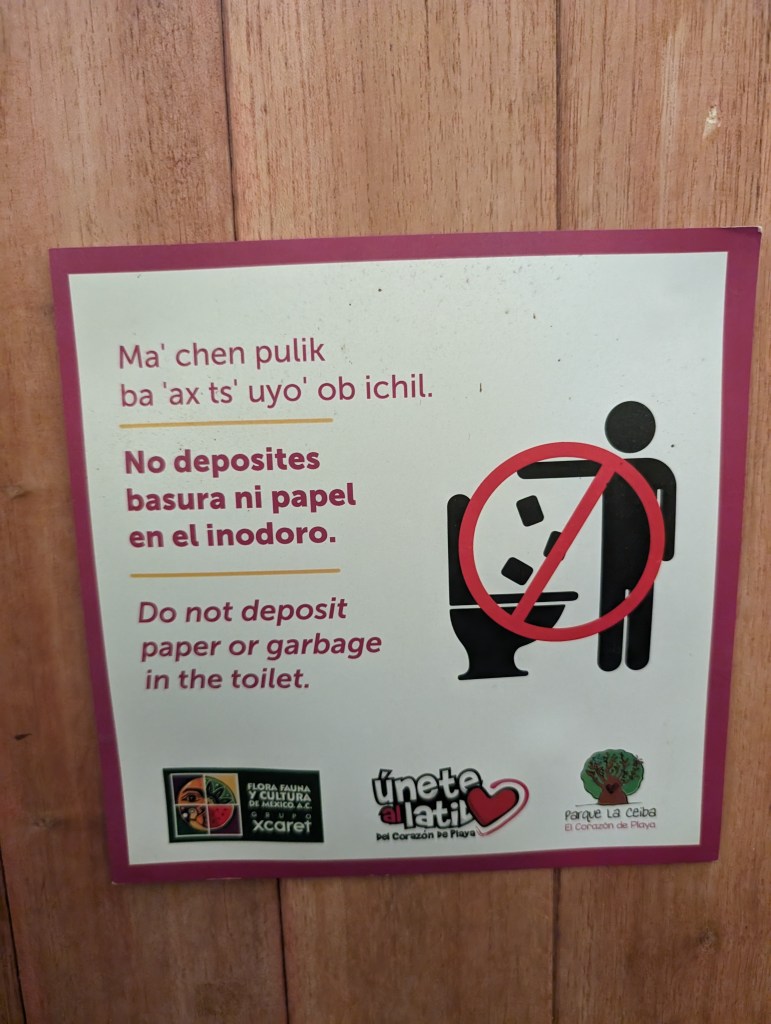
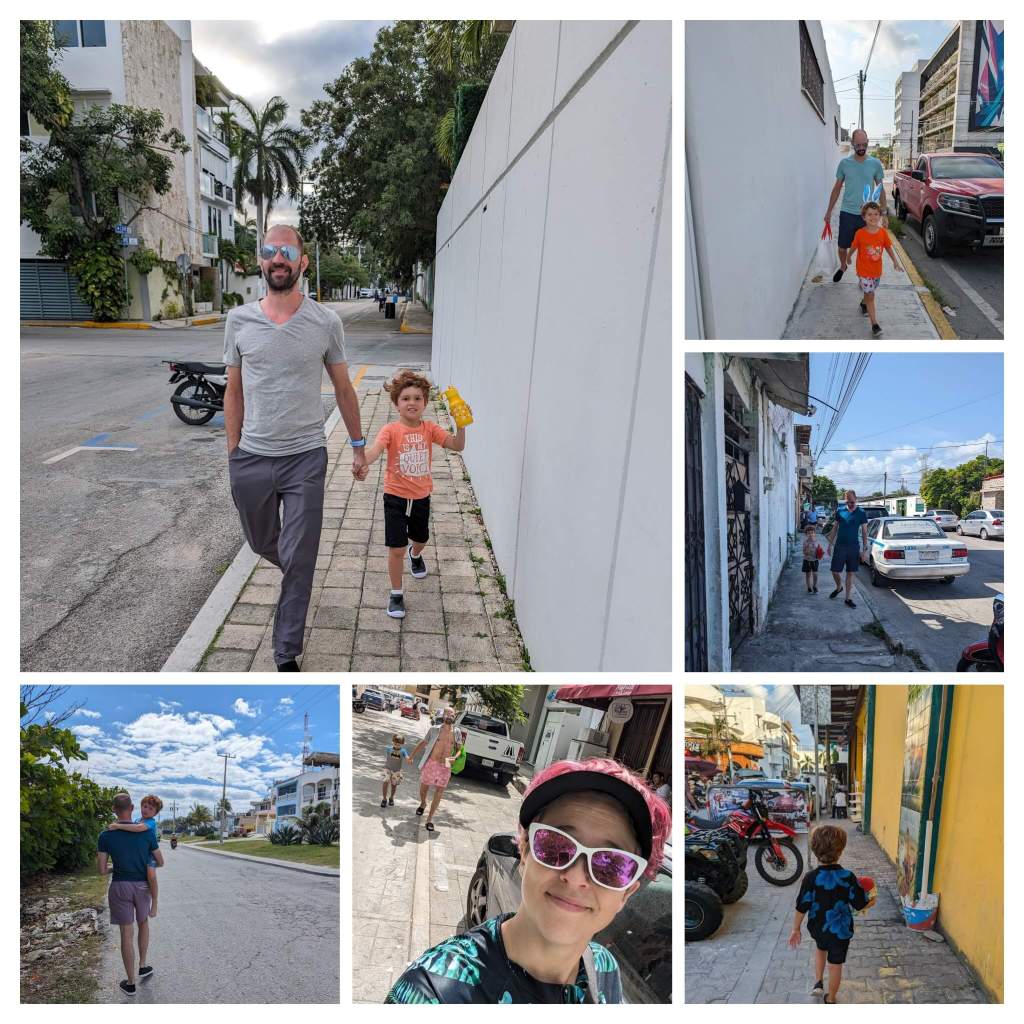

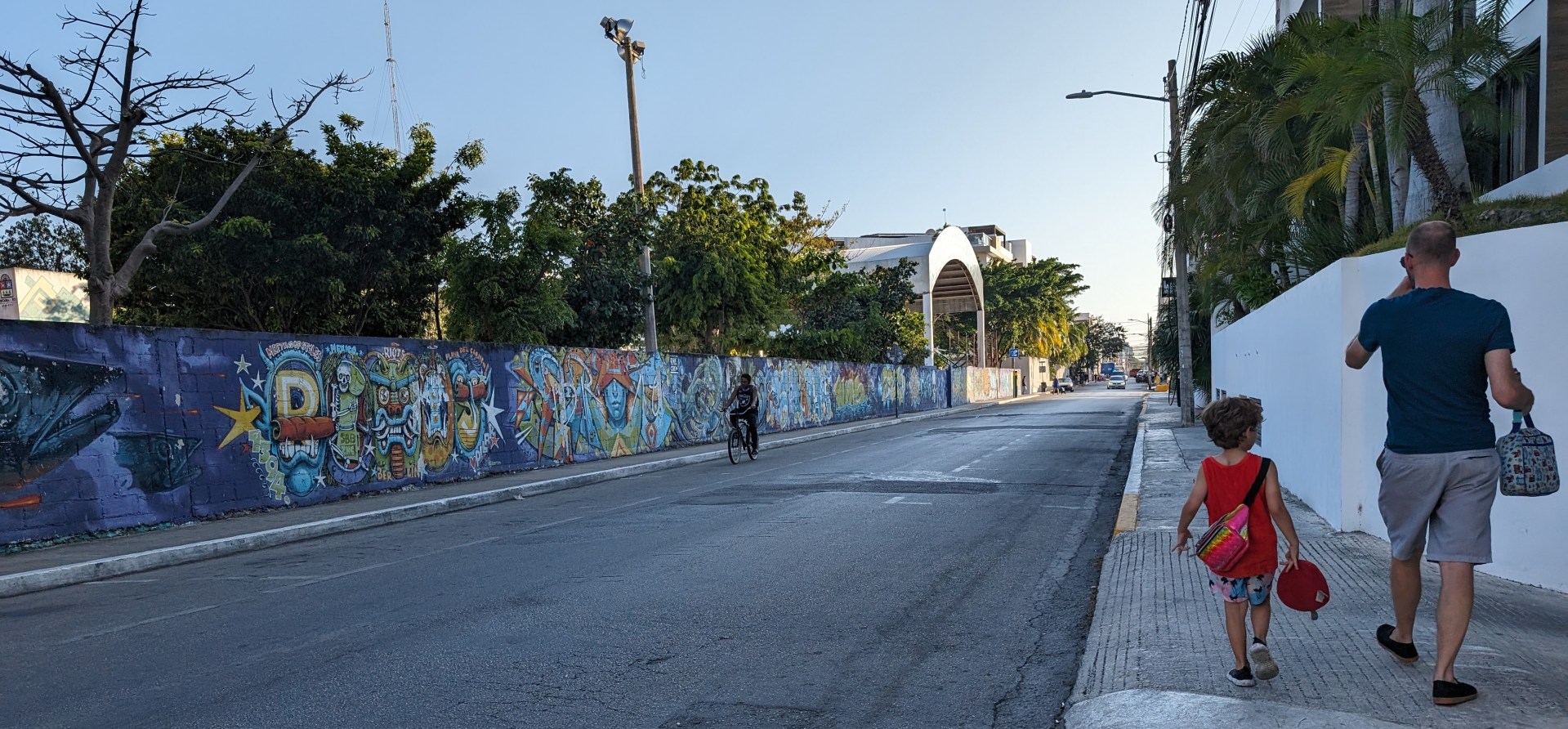
Playa del Carmen was the perfect location for a slow travel trip. (Our first trip was such a success, we did it again a year later!)
As a gorgeous tropical destination with a low cost of living, Playa del Carmen (PDC) has nurtured a large international community made up of short term visitors and long term expats. English is widely spoken and understood, and Spanish doesn’t create a huge language barrier (but speaking some Spanish definitely helps). PDC overlaps American time zones meaning we could work our usual working hours. It’s easy to get to, with direct flights to Cancun from many US destinations, including our home base of Nashville. And with such a large contingent of American and Canadian visitors, we knew it would be easy to get nearly anything that we might need during the trip.
Cost is also a factor when choosing a slow travel destination. While the peso keeps getting stronger, the dollar still goes pretty far in this part of Mexico so dinners, groceries and alcohol all cost less than at home. Add in the number of free or cheap activities in the area, we knew we would not have to spend much in terms of entertainment.
Where else have we slow traveled?
In addition to spending time in Playa del Carmen, we have also slow-traveled overseas, in the Netherlands, and domestically, within the US and Canada.
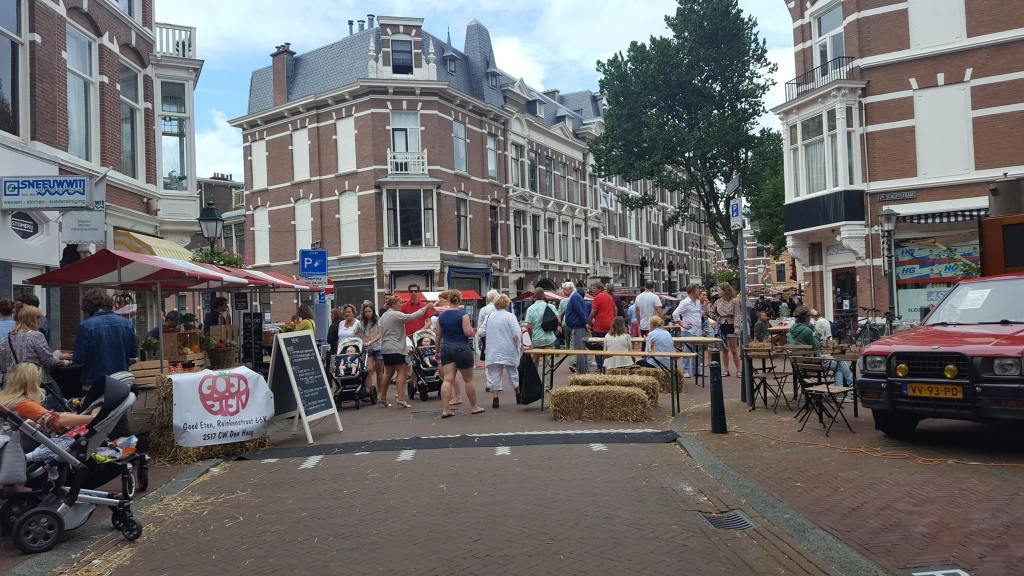
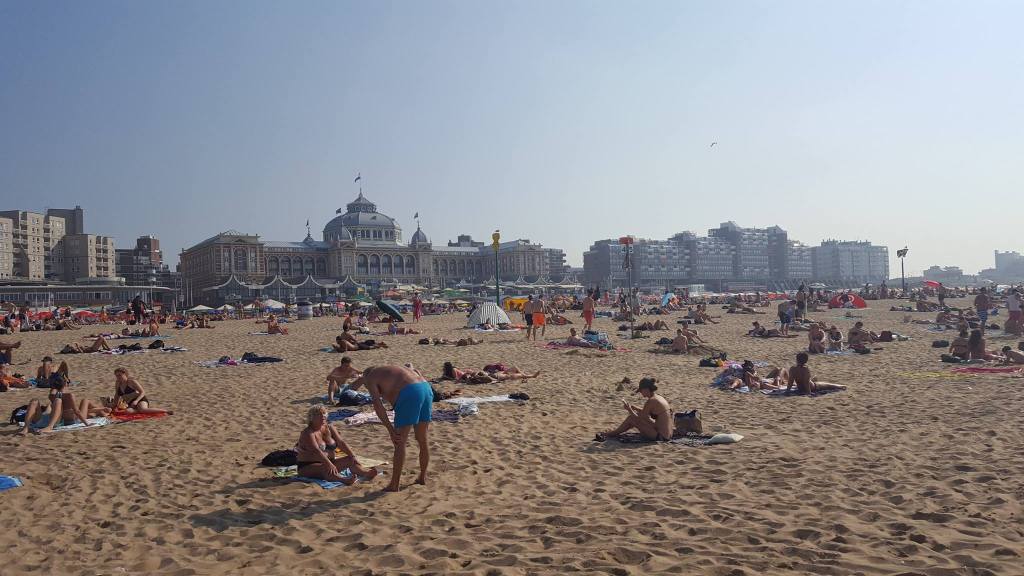
In 2016, pre-children (when travel was simpler), we took advantage of our remote-work situation by spending 6 weeks in Europe. While we spent two of those weeks on PTO, including an unhurried and special week in Barcelona, followed by a whole month living in the Hague (thanks, HomeExchange!). We worked from late morning to evening so we had overlapping hours with our colleagues, enjoyed leisurely mornings in our beautiful temporary home, and explored the city after work and on weekends. We hung out with some family friends who live in the city as well as the adult children of our home exchange partners. We also had time for day trips to other Dutch cities, since you can get everywhere by train in a matter of hours. By the end of the month, we had a go-to pizza place, a preferred grocery store, and some favorite restaurants.

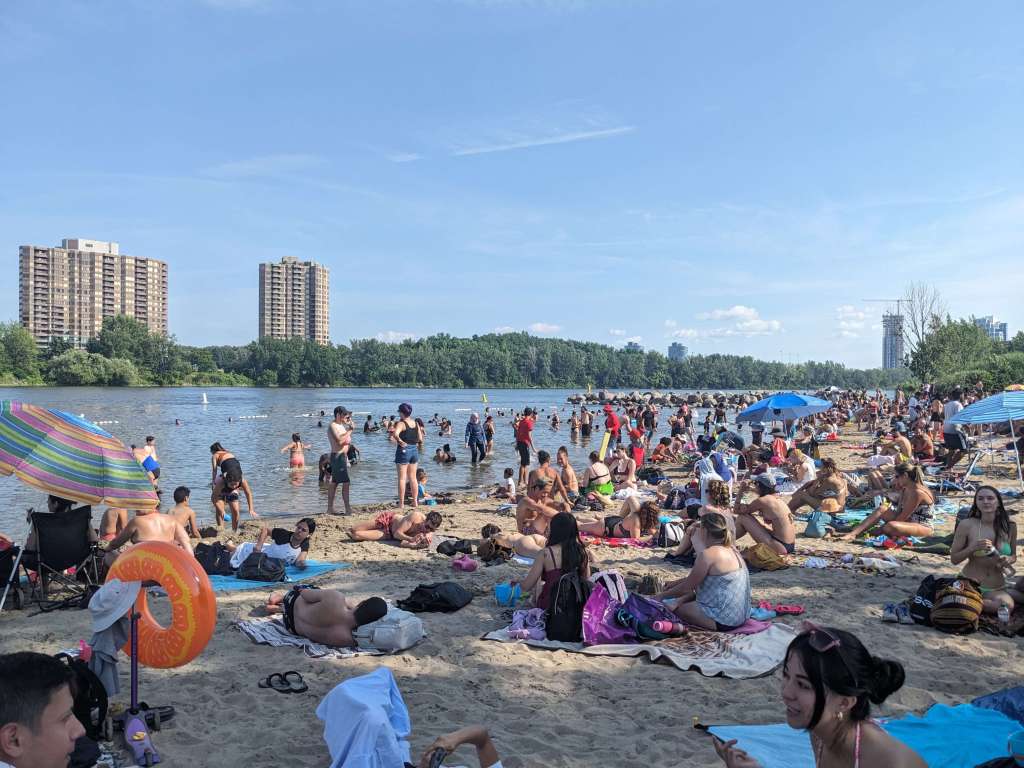
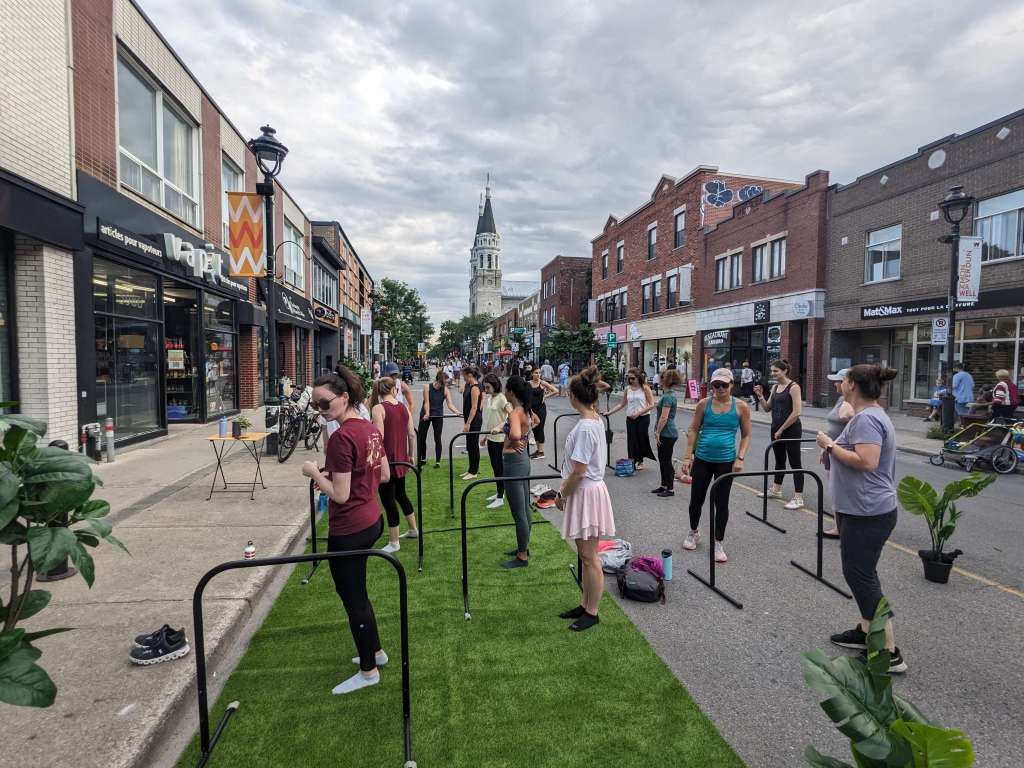
In 2023, we spent two weeks living and working from Verdun, Montreal. This was one of our favorite home exchange trips and family workcations, ever. We never felt rushed to see it all, yet we saw a lot of the city. We spent a lot of time hanging out in our neighborhood, soaking up local life in Verdun. We went grocery shopping and played at almost every playground in the area. We spent lazy weekend afternoons at the beach. We even made friends with some locals and went out to dinner and to the nature reserve together! The whole trip was so stress-free and relaxed. We would totally return to Verdun for another low-key, slow travel experience.

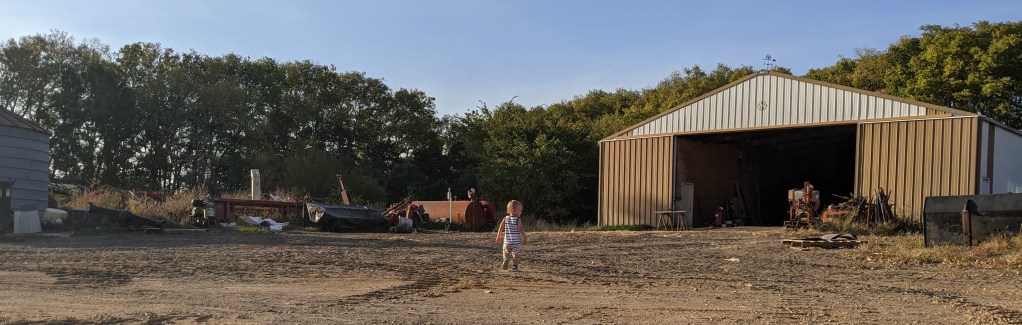
Domestically, we’ve spent 2-3 weeks at a time in both Sioux Falls, to visit family, and Chicago, to spend time in our favorite city and hang out with friends and coworkers. We often find that “visiting trips”, or travel that you do with the sole intention of spending time with people rather than a specific destination, can feel more exhausting than vacation travel simply because you’re “on”, engaging with people, much of the time. If it’s family that you don’t see very often, there can be pressure to make the most of limited time, creating a jam-packed tiring schedule. When you’re trying to cram a lot into a short visit, unexpected hiccups feel bigger than they are. And sometimes, an hour-long visit with grandma once a year is just not enough to sustain the grandparent-grandchild relationship.
Slow travel has let us connect with long-distance family in ways that we just wouldn’t be able to in a more traditional rushed trip (like when we have visited at Christmas time; so much to do in five days!!!!). We can have rest days and downtime built into our schedule, not to mention the 1:1 time with family members instead of always having large group gatherings. The kiddo has been able to spend the night with his grandparents and cousins, letting us have adult nights out with other adult family members that would be more challenging to schedule on a shorter visit. Slow travel has allowed us to integrate more into our friends’ and family’s regular life without anyone having to take special time off work or go out of their way to see us during a very tight window.

Tell me about your slow travel experiences!
Share your slow travel stories! Where have you been, and what did you learn? What’s the longest you stayed in one spot? (For me: 10 months in Paris). What was your favorite place? (It’s hard to choose between den Haag and PDC). For those who haven’t yet had the opportunity to spend a lot of time in one place during a trip, let me know what you might be curious about!!
Discover more from No Place Like Anywhere
Subscribe to get the latest posts sent to your email.